Categories

By PPCexpo Content Team
Everyone thinks they see the full picture. Most don’t.
That’s the problem with strategy meetings. Teams gather to list strengths and weaknesses, chase big wins, and try to predict risks. But what happens when bias clouds the facts? What if one voice steers the room? That’s when SWOT analysis goes off course.
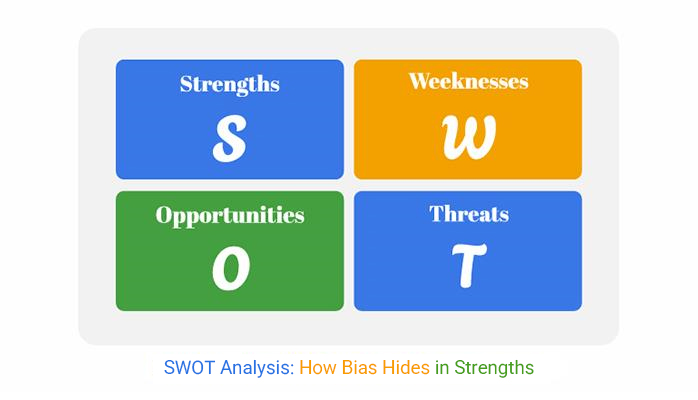
SWOT analysis is supposed to guide teams to smart decisions. But it often slips into guesswork. Confirmation bias, groupthink, and overconfidence sneak in. People defend their turf. They nod along. They skip the hard questions. The whole process starts to lean instead of standing.
SWOT analysis can be much more. When done right, it challenges blind spots and sparks better decisions. With real data, fresh thinking, and space for dissent, it keeps strategy grounded. This isn’t about filling boxes. It’s about cutting through the noise and staying sharp. Want a process that works? Make SWOT analysis honest, dynamic, and real.
Biases are sneaky. Confirmation bias and anchoring can twist your analysis before you even know it. You think you’re weighing options, but your mind’s already made up, clinging to the familiar. One way to counter this is to shake up the team. Bring in fresh faces, new perspectives. And don’t just wing it, use cold, hard data. Numbers don’t lie, and they can keep you honest when your brain’s playing tricks.
Diverse viewpoints are your ally. Rotate team members to keep things fresh and unpredictable. It’s like stirring a pot to keep the flavors from settling. This mix keeps biases at bay by forcing everyone to confront different ideas. Don’t be afraid to challenge each other. If something feels off, it’s usually worth a second look. The goal? A clearer, more balanced view that cuts through the fog of preconceived notions.
Emotions can be your worst enemy when you’re knee-deep in analysis. Overconfidence blinds you, while the fear of admitting weaknesses can stifle honest discussion. A “devil’s advocate” can be your best friend here. This role is all about poking holes and asking the tough questions. It feels uncomfortable at first, but that’s how you know it’s working. It forces you to justify every strength and weakness, turning vague feelings into hard facts.
Encourage open feedback, no holds barred. Create an environment where everyone feels safe to speak up, even if it means revealing vulnerabilities. This isn’t about pointing fingers; it’s about finding the truth. When team members feel they can be honest, the quality of insights skyrockets. The process gets smoother, more refined, and ultimately, more reliable.
Data is your anchor in the stormy sea of subjective opinions. It cuts through the noise, grounding your decisions in reality. Real-time market data and competitor analysis platforms are not just tools but lifelines. They provide a clear, unbiased look at the landscape, allowing you to make decisions based on what’s happening now, not what you wish were true.
Subjectivity can skew results, so lean on data to keep things straight. Use it to back up claims and challenge assumptions. The insights gained from accurate data can be transformative, turning what feels like a guessing game into a strategic plan. You move from reacting to predicting, and that shift can make all the difference in high-stakes scenarios.
Confirmation bias and groupthink can quietly sabotage your strategic evaluations. Picture a team so focused on their initial ideas that they miss glaring weaknesses. The result? A skewed analysis that only reinforces existing beliefs. To dismantle this bias, encourage diverse opinions. A room full of nodding heads won’t spot the iceberg ahead. Invite fresh perspectives and use structured brainstorming sessions. These aren’t just fancy words; it’s about shaking up the status quo.
Structured brainstorming is your ally. It forces teams to think beyond their comfort zone. Break down the walls of conformity by asking, “What are we missing?” Encourage debate. A little chaos can spark creativity. Have team members rotate roles to gain new insights. Your goal is to make sure every voice is heard, not just the loudest or most popular. This isn’t about endless meetings, but about ensuring no stone is left unturned.
Overconfidence bias is a silent threat. It makes teams overlook threats or weaknesses, believing they’re invincible. They think, “We’ve got this,” until reality hits. To ground assumptions, bring in external experts. Their fresh eyes can spot what the team misses. Data is another powerful tool. It offers an objective reality check, reminding teams that gut feelings aren’t always right.
Don’t let overconfidence blind your team to potential pitfalls. Encourage humility in decision-making. Remind teams that even the best can falter. Use data to challenge assumptions, not just confirm them. Ask, “What if we’re wrong?” It’s a simple question with the power to save a project. The goal isn’t to deflate confidence but to inject a dose of reality. A balanced view is the best defense against overconfidence.
Biases don’t play favorites. They manifest differently across departments, skewing outcomes. For instance, marketing might focus too heavily on opportunities, while finance worries about threats. These varying perspectives can lead to misalignment. Cross-functional workshops are a great way to bridge these divides. They allow teams to share insights and align on a common goal.
Each department brings its own set of biases to the table. Recognize this diversity as a strength, not a weakness. Encourage departments to share their unique viewpoints. It might get messy, but that’s where the magic happens. Use these workshops to align on a shared vision and limit bias. This isn’t just about filling a room with people; it’s about building a cohesive strategy that reflects the whole organization, not just one part of it.
The following video will help you do a SWOT Analysis in Microsoft Excel.
The following video will help you do a SWOT Analysis in Google Sheets.
Ever been in a meeting where everyone nods along, and you wonder if they’re really thinking or just playing it safe? It’s common, and it’s stifling. Encouraging an environment where challenging assumptions are the norm can break this cycle. Start by encouraging everyone to voice their thoughts, even if they’re unpopular. Sometimes, the quietest person in the room holds the insight that flips the script.
Hierarchy can be the elephant in the room, making folks hesitate to speak up. Flattening this structure, at least temporarily, can invite more honest debates. Consider mixing up seating arrangements or having anonymous suggestion boxes. When everyone feels their voice is equal, the conversation gets rich. Encouraging open debates creates a culture where fresh ideas flow and assumptions are tested rather than accepted blindly.
Leadership isn’t just about steering the ship; it’s about setting the tone for open analysis. Leaders who model openness and encourage dissent create an environment where diverse opinions thrive. It’s not about being the loudest voice but about listening actively and valuing every contribution. Leaders can ask probing questions, inviting team members to delve deeper into their suggestions.
Encouraging dissent isn’t about inviting conflict but fostering healthy debate. Leaders should create spaces where team members feel safe to disagree and discuss various perspectives. This means recognizing and rewarding those who challenge the status quo. It’s about showing that every voice matters. In doing so, leaders not only prevent groupthink but pave the way for more comprehensive evaluations.
Red-teaming sounds like something out of a spy novel, but it’s a powerful tool for challenging assumptions. It involves assigning a team to play the devil’s advocate, questioning every part of the analysis. This method uncovers potential blind spots and adds depth to evaluations. The goal is to shake up the status quo and view things from different angles.
Introducing red-teaming into the process doesn’t have to be complicated. Rotate team members regularly to keep perspectives fresh. Encourage them to think critically and challenge existing assumptions. When done right, red-teaming not only strengthens the analysis but sparks creativity and innovation. It’s about looking at old problems with new eyes and ensuring nothing slips through the cracks.
By embracing these approaches, organizations can break free from the confines of groupthink. It’s about creating a dynamic environment where ideas collide, assumptions are tested, and strategies become more robust. When everyone feels empowered to speak up, the collective intelligence of the team shines, leading to better decision-making and strategic success.
Incorporating real-time market intelligence into your strategic evaluation isn’t just about collecting data. It’s about painting a clearer portrait of the competitive landscape. Think of it like having a secret map that shows where opportunities and threats are lurking. Market research platforms and competitor analysis tools are your go-tos here. They offer a window into what your rivals are up to and what the market expects next.
Picture this: You’re in a meeting and someone mentions a new competitor on the horizon. Instead of scratching heads, you whip out data from your trusty market research tool. Instantly, you’ve got insights on their strengths, possible market disruptions, and how you can counteract them. No more guessing games. With these tools, your evaluations become more than just educated guesses; they’re rock-solid strategies backed by real-time data.
Let’s talk predictive analytics. It’s the crystal ball of strategic planning. By analyzing patterns and trends, these tools help foresee future threats and opportunities. Imagine knowing what your market will look like next quarter or even next year. With predictive analytics, you’re not just reacting to changes; you’re anticipating them.
Picture a scenario where your team spots a decline in a particular market segment. Instead of panicking, you lean into predictive analytics to uncover why and forecast if it’s a blip or a trend. This foresight allows you to strategize effectively, turning potential threats into opportunities. By embedding predictive tools in your evaluation process, your strategic foresight becomes sharper, more accurate, and, dare we say, almost prophetic.
Benchmarking is like having a set of guidelines that show where you stand against industry norms. It’s about finding those gaps in your strengths and weaknesses, and seeing if you’re really as good as you think you are. Industry standards provide a yardstick to measure your performance, ensuring your strategies aren’t just good, they’re competitive.
Imagine your team discussing market positioning. Someone suggests a new direction, but you’re not sure if it’s on par with industry standards. Enter benchmarking data. It reveals if your strengths are truly strong or if there’s room for growth. These insights not only refine your strategies but also boost confidence in decision-making. By continually comparing against industry benchmarks, your evaluations remain aligned with market expectations, ensuring you stay ahead of the curve.
Sometimes, the most glaring issue is right under our noses, but we choose to see it in black and white. Many tend to paint threats and opportunities with broad strokes, missing the intricate details that could make or break a decision. By reducing complex issues to simple terms, we risk losing the strategic depth needed for effective planning. It’s like looking at an iceberg and only considering the visible tip, rather than acknowledging the massive structure lurking below the surface.
To avoid this trap, consider scenario planning or engaging in a deeper market analysis. Dive into the specifics of threats and opportunities, exploring various angles and potential outcomes. Imagine a chessboard where each piece plays a vital role; understanding their moves can lead to a winning strategy. By understanding the nuances, you’ll arm yourself with insights that go beyond the surface, allowing for more informed decisions.
Ever been so confident in your strengths that you overlook glaring weaknesses? It happens. Biases can make us focus too much on our positives while sweeping negatives under the rug. It’s like admiring a shiny apple without noticing it’s rotten on the inside. This skewed perspective can lead to faulty conclusions.
The antidote? Seek external feedback and engage in critical conversations. Bring in fresh eyes to assess strengths and weaknesses objectively. It’s like asking a friend if your outfit works; sometimes, you need that outside perspective. Encourage open dialogue within your team, where every member feels safe to voice concerns. By addressing biases head-on, you’ll create a more balanced view of where you stand.
Treating SWOT as a one-time exercise is like reading a single chapter of a book and thinking you know the whole story. Markets shift, conditions change, and what worked yesterday might not work tomorrow. A static approach can leave you unprepared for what’s next.
To keep your analysis alive, make it a dynamic exercise that reflects ongoing market conditions. Regularly revisit and update your findings to stay relevant. Think of it as maintaining a garden; continual care and adjustments lead to growth and resilience. By evolving your analysis, you’ll remain agile and ready to tackle whatever comes your way.
Conflicting feedback during a SWOT analysis can turn a meeting into a battleground. Picture this: Marketing thinks everything’s peachy, while Finance is waving the red flags. It’s chaos. Different teams bring their perspectives, and if you don’t align them, you’ll end up with a skewed analysis. The solution? Use data to guide discussions. Numbers don’t lie. They can bridge gaps in understanding and provide a common ground for all departments.
Cross-functional SWOT workshops can play a crucial role here. These workshops bring everyone to the table, literally and figuratively. Make it a space where different perspectives are not just heard but valued. Encourage open dialogue and use structured sessions to keep things on track. When everyone’s voice matters, the analysis becomes richer and more balanced.
Imagine trying to piece together a puzzle where every department holds a piece, but no one’s willing to share. That’s what conflicting perspectives feel like. Marketing’s excited about a new campaign, but Product Development’s worried about feasibility. Aligning these views is essential. Start by bringing in data as the common language. It’s hard to argue with facts. Use these insights to steer discussions and help teams see the bigger picture.
Holding cross-functional workshops can also help. These sessions encourage departments to collaborate, share insights, and understand each other’s viewpoints. By fostering an environment of open dialogue, teams can align their strategies and work towards a common goal. It’s about building a culture where every opinion is respected and considered.
Picture a room full of experts, each convinced they’re right. That’s your typical cross-departmental meeting. To resolve disagreements, it’s crucial to embrace collaboration. Think of structured workshops as a stage where everyone gets to play their part. These sessions offer a platform for open discussions, helping teams resolve conflicts and align their strategies.
Bringing in a neutral third-party facilitator can also help mediate disputes. This person can guide conversations, ensuring everyone gets a chance to speak and that the discussion stays productive. It’s about creating an atmosphere where collaboration thrives, and disagreements are seen as opportunities for growth.
Data is the great neutralizer in any SWOT conflict. When opinions clash, facts can calm the storm. By bringing in benchmarking, performance data, and market trends, you provide an objective baseline. It’s like having a referee who calls it as it is, without bias. This helps reconcile differing views and aligns the team with reality, not just perception.
The role of data is to provide clarity. When different departments present conflicting feedback, data acts as the common ground. It offers objective insights that can steer the conversation and help teams find a resolution. By focusing on data-driven insights, teams can move beyond personal biases and work towards a more accurate and objective analysis.
Creating a space where people feel safe to speak their minds isn’t just about having a nice chat. It’s about letting team members know their voices matter. When folks know their opinions count, they’re more likely to share genuine, critical feedback. This kind of honesty is the backbone of a strong analysis.
Leaders can set the tone by inviting all voices to the table. Rotate who leads the discussions to break down power dynamics. Encourage team members to ask questions, no matter how small. This practice opens the floor for new ideas and keeps the analysis fresh and varied.
The fear of exposing weaknesses can stifle genuine conversations. No one wants to look like they don’t have it all together, right? But this fear can block essential insights. Techniques like anonymous feedback can give everyone a voice without the fear of being singled out.
Open forums can also help. When leaders show vulnerability, it permits others to do the same. A leader admitting, “I didn’t see that coming,” can be a powerful moment. It shows that it’s okay not to have all the answers. This approach fosters more open and honest discussions.
Challenging assumptions isn’t about causing trouble. It’s about making sure the analysis stands on solid ground. Team members need to feel confident in questioning assumptions without fearing backlash. Strategies like rewarding questions and celebrating dissenting opinions can do wonders.
Creating a culture where questioning leads to better insights starts with leadership. Leaders should model openness to challenges, showing that questioning isn’t just allowed, it’s encouraged. This approach turns assumptions into opportunities for deeper understanding.
Embedding SWOT analysis into the daily grind of your organization isn’t just about ticking off a box. It’s about making sure every decision, big or small, has a backbone of strategic thought. Start with the leadership team, inviting them to weave SWOT discussions into regular meetings. Encourage them to use this framework as a lens for viewing every opportunity or challenge.
Once leadership is on board, it’s time to bring in the troops. Train all departments on how to use SWOT in their daily tasks. Create a culture where every project proposal, marketing plan, or financial forecast is first run through a SWOT filter. This practice ensures that decisions are not just gut reactions but are supported by thorough analysis. Before you know it, you’ll have a team that’s not only talking the talk but walking the walk.
Regularly using SWOT analysis can transform your organization into a well-oiled machine that never stops improving. By constantly evaluating strengths, weaknesses, opportunities, and threats, teams learn to spot patterns and anticipate challenges before they become issues. This proactive approach fosters a mindset of always seeking better ways to operate.
But don’t just take my word for it. Implement a system where teams are encouraged to share their SWOT findings with others. This sharing not only builds a culture of transparency but also sparks innovation. When everyone is focused on continuous reflection, strategic decisions become second nature, and the organization thrives on collective wisdom.
An organization that regularly uses SWOT analysis becomes agile and resilient, ready to tackle any market shifts. By consistently assessing internal and external factors, teams stay informed and prepared for changes. This readiness allows them to pivot quickly, minimizing disruptions and maximizing opportunities.
To put this into practice, encourage teams to update their SWOT assessments regularly. Use real-time data to keep the analysis current and reflective of market conditions. This habit not only builds resilience but also empowers teams to make informed decisions swiftly. With a foundation of strategic thinking, the organization stands strong, no matter what the market throws its way.
The business landscape has its share of surprises. One moment you’re riding high, the next, you’re scrambling to keep up. That’s where being nimble with your analysis becomes vital. It’s not about predicting the future but being ready for it. Start by keeping tabs on industry reports and market trends. It’s all about spotting the faint ripples before they become waves.
Your team’s got to stay sharp, too. Rotate roles in your SWOT sessions to shake things up. Fresh eyes see things differently, and that’s your secret weapon. When everyone brings something new to the table, you’re more likely to spot those hidden threats or new opportunities. It’s like having a diverse toolset ready to tackle whatever comes your way.
Sometimes, looking through one lens isn’t enough. That’s why mixing in other frameworks can give you a fuller picture. For instance, pair it with PEST analysis to add a political and economic view. Or, throw in Porter’s Five Forces to see where competition might hit hardest. It’s not about collecting frameworks but using the right ones together.
Think of it as building a detailed map. Each framework adds a layer of insight. When you combine them, you’ve got a more reliable guide. It’s not just about identifying strengths or weaknesses but understanding how they fit into the broader business landscape. With this approach, you’re not just reacting; you’re planning with purpose.
Life’s unpredictable, and so is business. Scenario planning helps you prepare for the unexpected. It’s about crafting different stories of how the future might unfold and planning your moves accordingly. This way, when the unexpected happens, you’re not caught off guard.
Start by imagining a few possible futures. What if a new competitor enters the market? What if regulations change overnight? By thinking through these scenarios, you can test your SWOT analysis against each one. It’s like rehearsing for a play; when showtime comes, you’re ready for anything. This preparation helps you adapt quickly and confidently, no matter what challenges arise.
SWOT analysis isn’t about filling out a chart. It’s about asking better questions, facing hard truths, and making smarter calls with what’s real, not what feels safe.
Bias doesn’t announce itself. It slides into meetings, hides behind overconfidence, and nods along with groupthink. SWOT analysis can catch that, but only if teams stay sharp, challenge each other, and let data speak louder than comfort.
Don’t freeze your analysis in time. Markets shift. Assumptions about age. A static SWOT gets stale fast. Keep it active. Keep it honest. Use it to break silos, not protect them.
Use SWOT analysis to think, not to defend.
That’s how you make it work. That’s how it stays useful.
How much did you enjoy this article?



We will help your ad reach the right person, at the right time

Actionable insights discovered for you. Now you can do more in less time.

PPCexpo Keyword Planner will help you align your keywords with the customers’ intent.

Frequent audits will help you optimize your PPC campaign for success.

Visualizations give you the ability to instantly grasp the insights hidden in your numbers.

Experience the new revolution in reporting … click your way to insights, don’t scroll.

Calculate the number of combinations in your PPC campaign. It may surprise you.
Related articles


Margin analysis helps businesses assess profitability, track financial health, and optimize pricing strategies. Learn how to improve margins and maximize profit!

Pivot reporting helps you make data-driven decisions under pressure. Learn how to avoid common pitfalls and craft reports that drive business success. Read on!

Click to learn how to use Excel spreadsheet to track student progress. We’ll also address the following question: why is tracking progress important?